Walking a reactive dog: the first step out of the door
A reactive dog needs sightlines, room to step off, a way out and a time nobody else picks. We ask once what your dog finds hard, check every walk for roads, stiles, livestock and lead rules, and say plainly what no map can know.
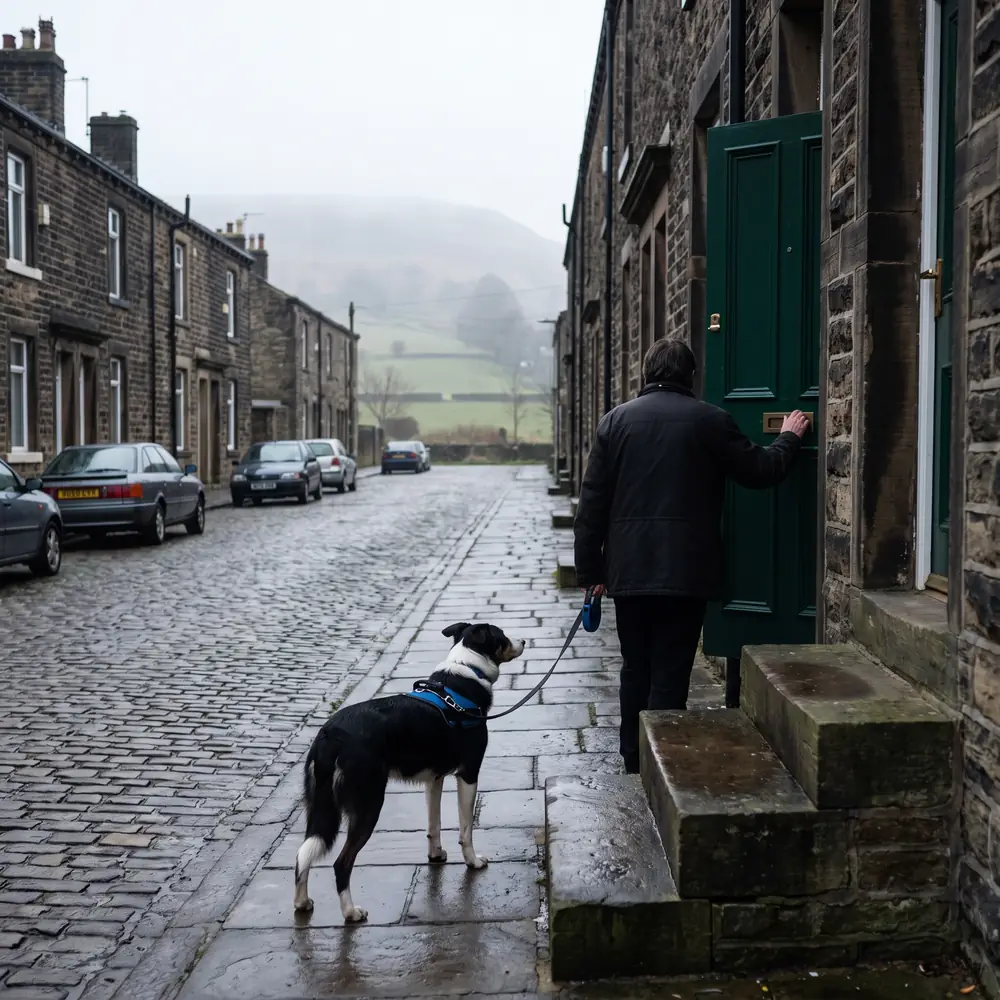
If you live with a dog who cannot meet another dog on a narrow path, you know the feeling at the door. The lead is in your hand and you are already running the walk in your head: the blind corner by the bins, the field with the gate that sticks, the loose spaniel whose owner will call "he's only being friendly" as it bounds over. Some days you go. Some days you do not. This guide is about the first step, and I am writing it for the household holding the lead, not for the dog.
What people said, in their own words
In September 2026 we read 1,559 posts and pages where dog owners talk about walks: reactive-dog forums, general dog forums, running forums, app reviews and the advice pages of the big charities. The same words came back again and again from people with a reactive dog. Needs space. He's only being friendly. See them coming. Wide paths. An emergency u-turn. Very, very early. Odd times. Dawn and dusk. And the places people actually go when everywhere else is too much: an industrial estate on a Sunday, a business park, a cemetery, a car park at first light. Nobody's app offers those, and plenty of people walk them every day.
The numbers
| Theme | Share of posts |
|---|---|
| Recall, off the lead | 24% |
| Time and busyness | 19% |
| Livestock | 14% |
| Heat, weather, season | 13% |
| Mud and surface | 10% |
| Other dogs | 8% |
| Enclosed fields to hire | 8% |
Underneath all of it ran something quieter, which is how lonely it is. People wrote about dreading the walk, about feeling judged, about the yellow bandana nobody reads. I am not going to pretend an app fixes that. What I can say is that the thing you need from a walk is not a mystery. It is sightlines, room to step off, a way out, and a time nobody else picks. Those are things a map can hold some of, and people can hold the rest.
What we ask before it suggests anything
The first thing We do is ask about your dog, once, so that it never has to ask again. What does your dog find hard: other dogs, strangers, traffic, bikes and runners, livestock, sudden noise, or nothing much. Where do they go off the lead: anywhere it is allowed, away from roads and livestock, only in a hired field, or not for now. How is their recall, with "not yet" as an answer nobody judges. And one question about you: how confident do you feel heading out right now? Wherever you are is fine. That is what the app is for.
Those answers are how it picks walks. A household whose dog finds traffic hard is not shown walks that run beside fast roads, and a household who cannot lift their dog is not shown walks with stiles. None of that is a promise about the ground. It is what the map says, matched to what you said.
What it checks, and what it cannot
Every walk the app suggests has been measured against the map before you see it: how much of it runs beside a road and how fast that road is, how many stiles are on the line, whether it passes grazing fields, whether a council order puts your dog on a lead along the way, whether it crosses a bird site in the nesting season. Each of those is on the card with where it came from. A walk with a stretch beside a 60 mph road and no pavement is not offered to anyone.
Now the honest part. The thing you most want to know is whether another dog will be round the corner, and no map anywhere holds that. It is not a fact about the ground. It is a fact about a Tuesday at half past seven, and the only people who can tell you are the ones who were there. The app collects exactly that, as dated check-ins from other walkers, with a count, and it is early days: most walks in the app are still from the map alone, and their badge says so. It never fills that gap with a guess.
Two more things the map does not measure, said plainly because they are the things that matter most to you: how far you can see along a path, and how wide it is. A towpath with a hedge on one side and water on the other reads the same as a wide track through a field. None of the layers we hold can tell them apart yet, and we would rather tell you that than let a blank read as reassurance.
The rest of the loop
The app is built to be used before the walk and after it, and hardly at all during. Check before you leave. Put the phone in your pocket. When you are back, three taps: how many dogs were about, whether anything had changed, and one private note on how your dog found it, calm, okay or hard work, which nobody but you ever sees. If a walk was not for you, say so and say why; the reason is the most useful thing you can give the app, and the next short list is chosen with it. Your own walks stay yours unless you choose to share one.
None of this is a cure, and we never tell you a walk is safe. What it gives you is a short list chosen for your dog, every fact on it dated and sourced, and the knowledge that the people reporting on those walks have dogs like yours. That is the first step. The door is the second. Where our data comes from lists every source behind the map.
Questions this answers
- How does Trekosa help with a reactive dog?
- It asks once what your dog finds hard and picks walks to match, with roads, stiles, livestock and council lead rules marked before you leave the house. It makes no promise about what is round the corner.
- Can the app tell me whether other dogs will be there?
- No map can. Only check-ins from walkers who were there can say that, at a named time of day, and the app says early days until enough of them have.
- Does anyone else see my walks?
- No, unless you share one. Your own walks stay yours, and the one private note on how your dog found a walk never leaves your screen.
Read next
- What makes a walk hardCows and dogs: why cattle follow a dog, and what to doCattle see a dog as a threat, most of all cows with calves. What the Health and Safety Executive and the Countryside Code say, and what to do if cows charge.
- What makes a walk hardDogs near sheep and cattle: the law when you are walking a dogWhat the law says about dogs near sheep and cattle in England, Wales and Scotland, what changed in March 2026, and how the app knows a field is grazed.
- What makes a walk hardCan a dog cross a cattle grid?A cattle grid is built to stop animals, and the gaps in its bars do not know a dog from a cow. Where the gate beside it is, and what the law says it is for.